Why a species’ past may determine its future success

Some plants do not just survive when they arrive somewhere new. They take hold, spread and reshape entire landscapes. The big question is why. A new study suggests the answer may lie far earlier than we assumed – in the evolutionary conditions that shaped those species long before they moved.
Researchers have put the evolutionary imbalance hypothesis to the test, asking whether plants from more competitive evolutionary environments arrive with a built-in advantage. Their findings point to a simple but powerful idea: where a plant comes from may matter just as much as where it goes.
The key concept is phylogenetic diversity, a measure of how evolutionarily varied a region’s species are. In high-diversity regions, species are more distantly related on average, meaning they have spent long periods adapting alongside a wide range of competitors. This creates intense competition over evolutionary time, forcing species to become highly efficient at capturing resources, growing quickly and establishing under pressure.
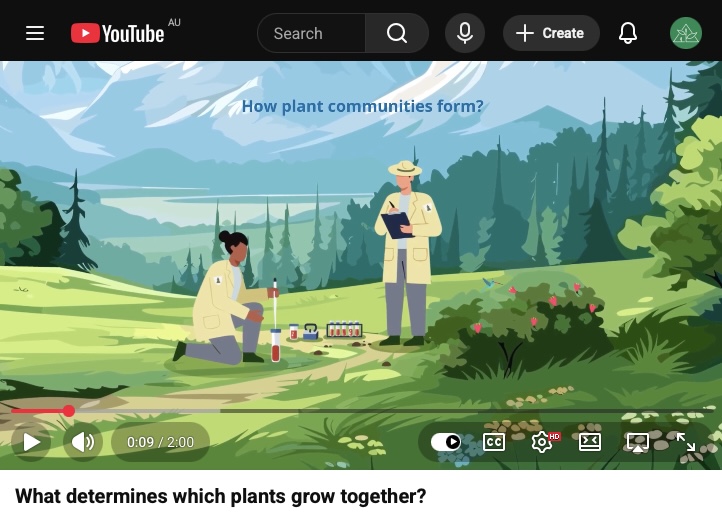
To explore whether that history translates into real-world success, the researchers introduced 166 plant species into grassland communities across Central Europe. They tracked how well these species established and survived over multiple growing seasons, comparing performance across different evolutionary backgrounds.
The results reveal a clear pattern. Species that evolved in regions with high phylogenetic diversity were far more successful at establishing themselves – particularly during the critical first year. They were also far less dependent on disturbance. While most invasive species benefit from disrupted environments, such as ploughed soil or human activity, these plants performed just as well in intact ecosystems.
By contrast, species from less diverse evolutionary regions struggled without disturbance. Their success depended on reduced competition, suggesting they lacked the same competitive edge. This distinction matters. It suggests that some invaders are not simply opportunistic, but are equipped to break into stable, functioning ecosystems from the moment they arrive.
The study also introduces a more precise way of understanding risk: relative phylogenetic diversity. Instead of looking at species in isolation, the researchers compared the evolutionary diversity of an incoming species’ native range with that of the community it was entering. This revealed that success depends on imbalance. Species were most likely to thrive when they originated from more diverse regions than the ecosystems they were invading.
In fact, in undisturbed communities, survival into the second year only occurred when this evolutionary imbalance favoured the newcomer. In other words, invasion success is not just about strength. It is about being stronger than the competition shaped by a different evolutionary history.
Climate still plays a decisive role. Species performed best when their native environments closely matched the new conditions, particularly in terms of rainfall. Yet evolutionary advantages sometimes helped offset temperature differences, suggesting that competitive strength can compensate for imperfect environmental fit.
Plant traits offer part of the explanation. Species from high-diversity regions tended to have heavier seeds and characteristics associated with rapid growth and efficient resource use. These traits support successful germination and establishment, especially in crowded environments. But traits alone could not fully explain the pattern. Evolutionary background continued to predict success even after accounting for measurable characteristics, hinting at a deeper package of advantages built over long timescales.
The implications stretch beyond experimental plots. Regions rich in evolutionary diversity may act as sources of particularly competitive invaders, while ecosystems with lower diversity, including islands, may be especially vulnerable. This shifts how we think about invasion risk. It is not only about exposure or disturbance, but about mismatches in evolutionary history.
The study stops short of claiming that these advantages guarantee long-term dominance. The strongest effects appear early, and longer-term impacts remain uncertain. But in invasion biology, gaining a foothold is often the hardest step.
Some plants, it seems, arrive already prepared to take it.
Brian, J. I., M. van Kleunen, W. Dawson, A. Kempel, W. Zhao, and J. A. Catford. 2026. “Plants That Evolved Under High Phylogenetic Diversity Have Higher Invasion Success, Particularly in Undisturbed Communities.” Ecology Letters29, no. 6: e70417. https://doi.org/10.1111/ele.70417.
Originally posted to SGA’s Spheres of Knowledge